Growing up, Sunday afternoon always meant one thing in my family: a giant, heavy pan of classic Italian lasagna baking away in the kitchen. The entire house would fill with the warm aroma of slow-simmering garlic, sweet tomatoes, and melting cheese. It was the ultimate comfort food tradition.
But a few years ago, my doctor told me I needed to significantly cut back on processed grains and simple carbs to fix some stubborn gut issues and keep my energy levels from crashing every afternoon. Suddenly, my beloved pasta ritual felt like a total health hazard.
I refused to give up on my favorite family tradition, so I started searching for a solid low carb cabbage lasagna recipe. I tried using zucchini ribbons first, but they released so much water that my lasagna looked like a sad, runny soup. I tried eggplant slices next, but they turned incredibly bitter and mushy.
Then, during a casual chat at a local farmer’s market, an older Italian woman told me her family’s secret weapon for low-carb cooking: green cabbage leaves. I was definitely skeptical at first. I worried the dish would taste like boiled cabbage rolls instead of authentic pasta.
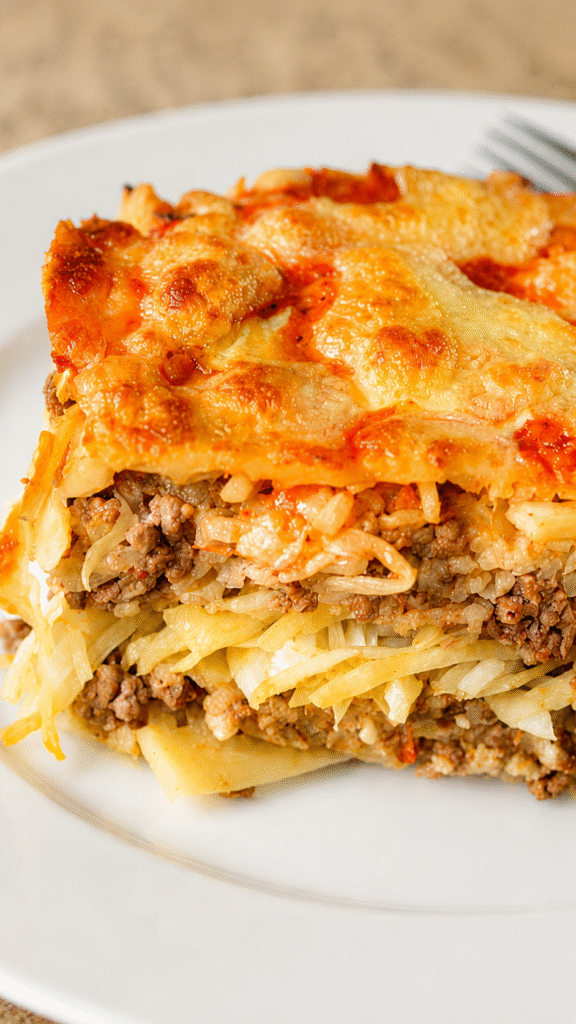
But I went home, experimented with a fast parboiling trick, and built a thick, slow-simmered meat sauce to balance the vegetables. The result completely blew me away. When you prep the cabbage leaves correctly, they lose their bitter crunch and turn incredibly tender, acting just like sheet pasta. They hold up perfectly under a sharp knife, giving you beautiful, clean layers and a rich, hearty bite.
This keto cabbage lasagna quickly became my absolute favorite recipe to make whenever I miss old-school comfort food. It hits all those nostalgic flavor notes perfectly, keeps my energy levels incredibly smooth, and contains only a tiny fraction of the carbs found in white flour noodles. Let’s look at exactly how to make it perfectly without a single drop of excess water.

Why You’ll Love This Recipe
- Clean, Sturdy Layers: Unlike zucchini or squash, properly dried cabbage leaves do not break down into a watery mess. Your lasagna squares will stand up beautifully on the plate.
- Massive Savings on Carbs: A traditional slice of lasagna packs over 40 grams of simple carbs. This healthy vegetable alternative keeps it under 7 grams of net carbs per serving!
- Naturally Gluten-Free & Grain-Free: An excellent, wholesome choice for anyone managing celiac disease, wheat allergies, or general inflammation.
- Rich, Authentic Flavor: Thanks to our triple-cheese filling and a custom blend of ground beef, you won’t feel like you are missing out on the real thing.
- Stays Fresh for Days: This casserole is a meal-prep dream. The flavors actually sink deeper into the cabbage leaves as it sits in the fridge overnight.
Key Ingredients
- Green Cabbage: Provides wide, sturdy sheets that replace traditional pasta noodles seamlessly.
- Ground Beef: Adds a rich, protein-packed, and traditional meaty flavor base.
- Low-Carb Marinara: Delivers classic tomato acidity without any added refined sugars.
- Yellow Onion: Builds a sweet, aromatic flavor foundation inside the meat sauce.
- Ricotta Cheese: Creates a luxurious, velvety white layer throughout the dish.
- Large Egg: Acts as a binder to keep the ricotta from melting away.
- Shredded Mozzarella: Melts into a stretchy, gooey blanket over the entire top.
- Grated Parmesan: Inject a sharp, salty, and authentic Italian umami punch.
- Garlic Powder: Flavors the cheese filling with a warm baseline savoriness.
How to Make Low Carb Cabbage Lasagna
Step 1: Prep and Parboil the Cabbage
Preheat your kitchen oven to 375°F (190°C). Bring a massive pot of heavily salted water to a rolling boil on your stove. Use a sharp chef’s knife to carefully slice the hard core out of the bottom of your cabbage head. Gently peel away 12 to 14 large, clean outer leaves. Drop the whole leaves into the boiling water for exactly 3 minutes until they look pliable and soft.
Step 2: Shave and Dry the Leaves
Use tongs to pull the cabbage leaves out of the boiling water and lay them completely flat across a clean kitchen towel. Take a second towel and pat the tops completely dry. Pro Tip: Take a small knife and carefully shave down the thick, woody white vein running down the back center of each leaf. Making them flat ensures your lasagna layers stack evenly without large air pockets!
Step 3: Simmer the Thick Meat Sauce
Place a deep skillet over medium-high heat. Add your ground beef and diced yellow onion. Sauté for 6 to 8 minutes, mashing the meat into very fine pieces until no pink spots remain. Carefully drain off any pooled grease from the pan. Pour in your low-carb marinara sauce, turn the heat down to low, and let it simmer uncovered for 10 minutes until it reduces into a very thick, heavy meat sauce.
Step 4: Whip the Ricotta Mixture
While the red sauce is thickening up on the stove, grab a medium mixing bowl. Toss in your full-fat ricotta cheese, the large beaten egg, garlic powder, and half of your grated parmesan cheese. Use a heavy spoon to whip the ingredients together vigorously until the white mixture looks completely smooth, light, and uniform.
Step 5: Assemble the Lasagna Layers
Grab a 9×13-inch baking dish. Spread a thin layer of your thick meat sauce across the very bottom of the dish. Lay down 3 to 4 dried cabbage leaves right over the sauce, overlapping the edges slightly so you can’t see the bottom of the pan. Use a spoon to smoothly spread half of your ricotta mixture across the cabbage leaves. Sprinkle a handful of mozzarella, then top with a heavy layer of meat sauce. Repeat this pattern again: cabbage, ricotta, mozzarella, meat sauce.
Step 6: The Final Cheese Layer and Bake
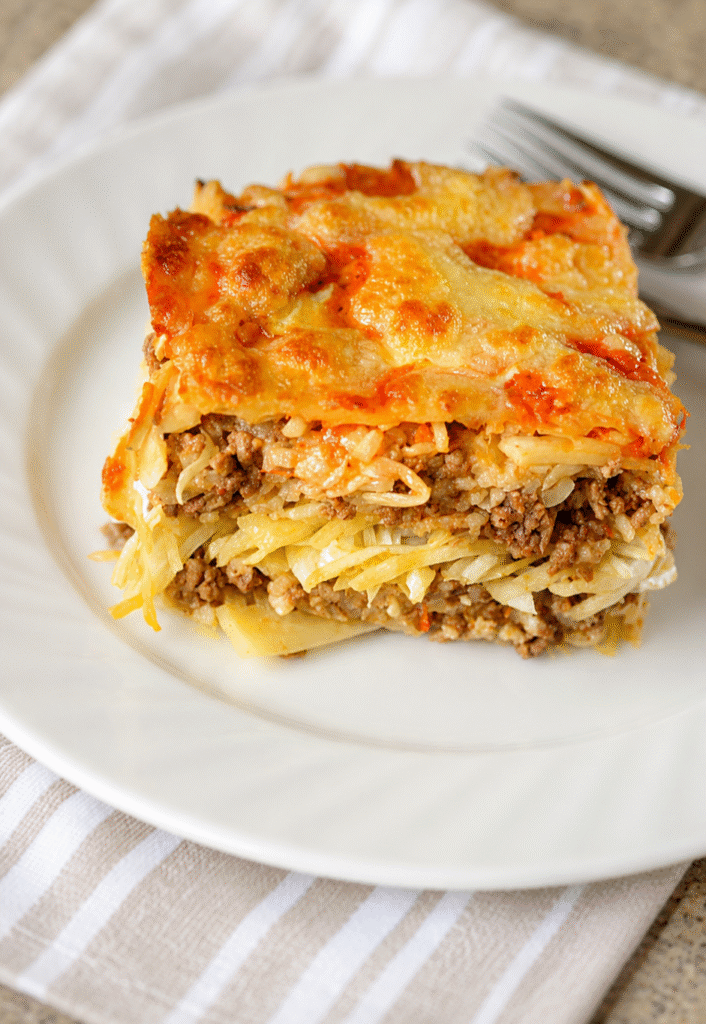
Place your last 4 cabbage leaves over the meat sauce. Spread the absolute last of your meat sauce over the top of the leaves, then smother the entire surface with your remaining shredded mozzarella and parmesan cheese. Cover the dish loosely with a sheet of aluminum foil and bake for 20 minutes. Remove the foil and bake uncovered for another 15 minutes until the top cheese is bubbling wildly and turning a gorgeous golden-brown.
Pro Tips for the Best Recipe
The 15-Minute Rest Rule: Please do not cut into your lasagna the second it comes out of the hot oven! If you slice it too early, the hot cheese will run, and your layers will slide apart. Let the dish rest untouched on your counter for 15 minutes. This lets the cabbage reabsorb the hot juices and locks the structure into place for perfect, clean squares.
Simmer the Sauce Dry: The absolute biggest mistake people make with vegetable lasagnas is using a thin, watery tomato sauce. Make sure you simmer your marinara uncovered until a lot of the water evaporates. A thick, pasty meat sauce keeps the cabbage leaves from getting slimy.
Pick the Right Cabbage: Look for a standard smooth green cabbage or a crinkly Savoy cabbage head. Avoid red cabbage, as its juices will turn your beautiful white ricotta layer into a strange, unappealing purple color during the baking process.
Avoid Pre-Shredded Mozzarella: Buy a solid block of whole-milk mozzarella and shred it yourself at home. Pre-shredded cheese bags are coated in dry cellulose powder to prevent clumping, which stops the cheese from melting into that classic, glossy restaurant-style blanket.
Storage
- To Store: Allow the baked cabbage lasagna to cool down completely to room temperature. Cut the leftover casserole into individual square portions and place them inside airtight glass storage containers. Keep it in your refrigerator for up to 4 days.
- To Reheat: For the absolute best texture, reheat your leftovers in the oven or an air fryer. Place a slice in an oven-safe dish, cover it with foil, and bake at 350°F (177°C) for 12 to 15 minutes until the center is steaming hot. Avoid using the microwave if you can, as it can make the cabbage leaves release a bit of extra moisture and lose their structure.

Frequently Asked Questions
Does this lasagna taste heavily like cabbage?
Not at all! Because we parboil the cabbage leaves in salted water first, that sharp, sulfur-like vegetable flavor washes away completely. The tender leaves easily absorb the rich fats from the garlic inside the sauce, making them taste remarkably neutral, just like regular pasta.
Can I assemble this dish ahead of time?
Yes! You can fully assemble all the layers in your baking dish the night before, wrap the pan tightly in plastic wrap, and store it in your fridge. When you are ready to eat, just pull the dish out of the fridge about 20 minutes before baking so the glass dish doesn’t crack in the hot oven, then follow the normal baking steps.
Can I use cottage cheese instead of ricotta?
Absolutely. If you want to boost the protein content even higher, you can swap out the ricotta cheese for an equal amount of full-fat cottage cheese. Just make sure to pulse the cottage cheese in a blender or food processor for 30 seconds first so it gets perfectly smooth and creamy before mixing in your egg.
Why did my lasagna still end up with liquid at the bottom?
If you still see a bit of water at the bottom of your pan, it means your cabbage leaves weren’t dried well enough after boiling. Next time, work hard to press down on the leaves with dry paper towels to squeeze out all their trapped internal moisture before you start layering.
Try These Recipes Also
Easy & Delicious Cauliflower Pastelón
Ultimate Low Carb Cabbage Lasagna (Keto & Ultra-Cheesy!)
Ingredients
- For the Vegetable “Pasta” Sheets:
1 large head fresh green cabbage (outer leaves carefully removed)
1 tbsp fine sea salt (for the boiling water)
- For the Thick Red Meat Sauce:
½ lb lean ground beef (85% lean)
1 small yellow onion (finely diced)
2 cups low-carb sugar-free marinara sauce
A pinch of salt and black pepper (to taste)
- For the Creamy White Cheese Layers:
15 oz (425g) full-fat ricotta cheese
1 large fresh egg (beaten)
½ tsp garlic powder
2 ½ cups whole-milk mozzarella cheese (shredded, divided)
½ cup parmesan cheese (freshly grated, divided)
Instructions
Fill a large, deep pot with water, add 1 tablespoon of salt, and bring it to a rolling boil over high heat. Carefully slice the hard core out of the bottom of your cabbage head, then gently peel off 12 to 14 large outer leaves. Drop the leaves into the boiling water for exactly 3 minutes until they are soft and bendable, then pull them out using kitchen tongs.
Lay the wet cabbage leaves completely flat across clean kitchen towels. Take paper towels and firmly press down on the tops of the leaves to remove all trapped moisture. Take a small knife and carefully shave down the thick, woody white vein running down the back center of each leaf so the sheets lay completely flat.
Set your oven to preheat to 375°F (190°C). Place a deep skillet over medium-high heat and drop in the ground beef, and diced onion. Cook for 6 to 8 minutes while breaking the meat up into fine crumbles. Carefully drain off any hot grease from the pan, pour in the marinara sauce, and simmer on low for 10 minutes until thick.
In a medium mixing bowl, combine your full-fat ricotta cheese, the beaten egg, garlic powder, half of your shredded mozzarella, and half of your grated parmesan cheese. Mix the ingredients together heavily with a spoon until the white filling looks completely light, creamy, and uniform.
Grab your 9×13-inch baking dish. Spread a thin layer of your thick meat sauce across the very bottom. Place 3 to 4 dried cabbage leaves over the sauce, overlapping them slightly. Smooth half of your ricotta mixture over the leaves, sprinkle a handful of mozzarella, and top with a thick layer of meat sauce. Repeat this layering pattern one more time.
Place your last 4 cabbage leaves over the meat sauce. Cover them with the absolute last of the red meat sauce, then smother the entire surface with your remaining mozzarella and parmesan cheese. Cover the pan loosely with foil and bake for 20 minutes. Remove the foil and bake uncovered for 15 minutes more until the cheese is bubbling and golden-brown. Rest for 15 minutes before slicing.
Notes
Shave the Center Veins: Always use a small knife to shave down the thick, woody stem running down the back of each cabbage leaf. Flattening the leaves makes your lasagna stack beautifully without massive air pockets. Simmer the Marinara Down: Make sure to simmer your meat sauce uncovered until it is thick and heavy. A watery red sauce will instantly soak into the vegetables and turn your baked lasagna into a runny soup. Squeeze the Leaves Dry: After boiling your cabbage leaves, press down on them firmly with dry paper towels. Removing the internal water from the vegetable sheets is the golden rule for preventing a soggy casserole. The 15-Minute Cooling Rule: Never cut into the lasagna right out of the oven. Let it rest untouched on your counter for 15 minutes so the melted cheeses can set and lock the clean layers into place for slicing. Grate Your Own Block: Avoid pre-bagged shredded cheeses. They contain starches that stop them from clumping in the bag, which prevents the mozzarella from melting into that smooth, glossy restaurant-style blanket.